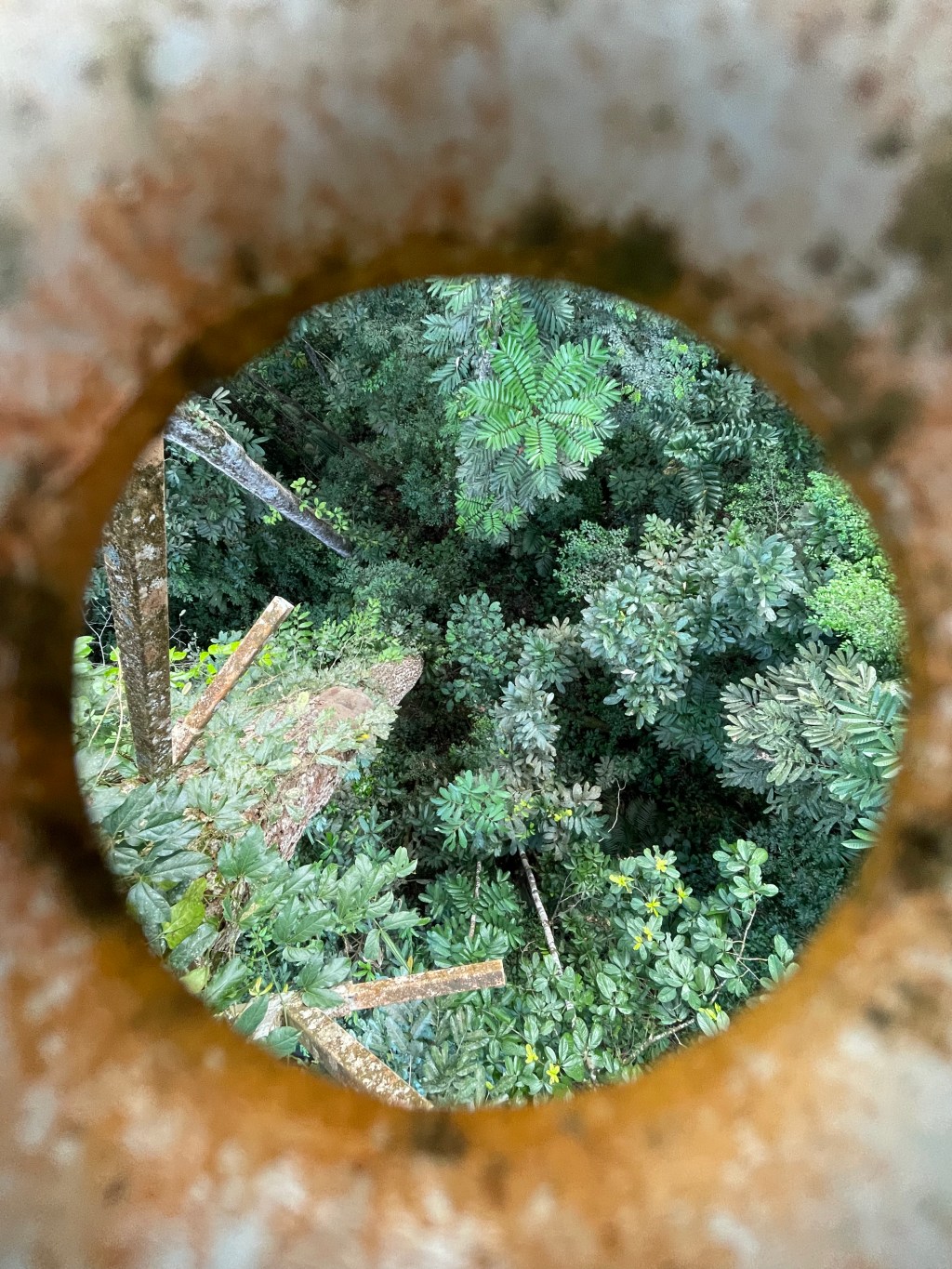
An overland journey from Georgetown to Surama Eco Lodge, North Rupununi
If you’re in a rush and don’t have time to read my full post about Surama Eco Lodge in Guyana – to sum it up – just go. It will change your life!
We had heard that travel within Guyana is expensive and difficult to organise. In many way that is true, so it is worth being prepared. There are no coach services or trains, so it’s either a case of flying ($$), chartering a plane ($$$) or using overland minivan company ($). Guyana does not attract many tourists and the vast majority of the population live around Georgetown and Linden. However if you’re visiting Guyana of course you want to see the interior as that is where the unspoilt, abundant nature lies!
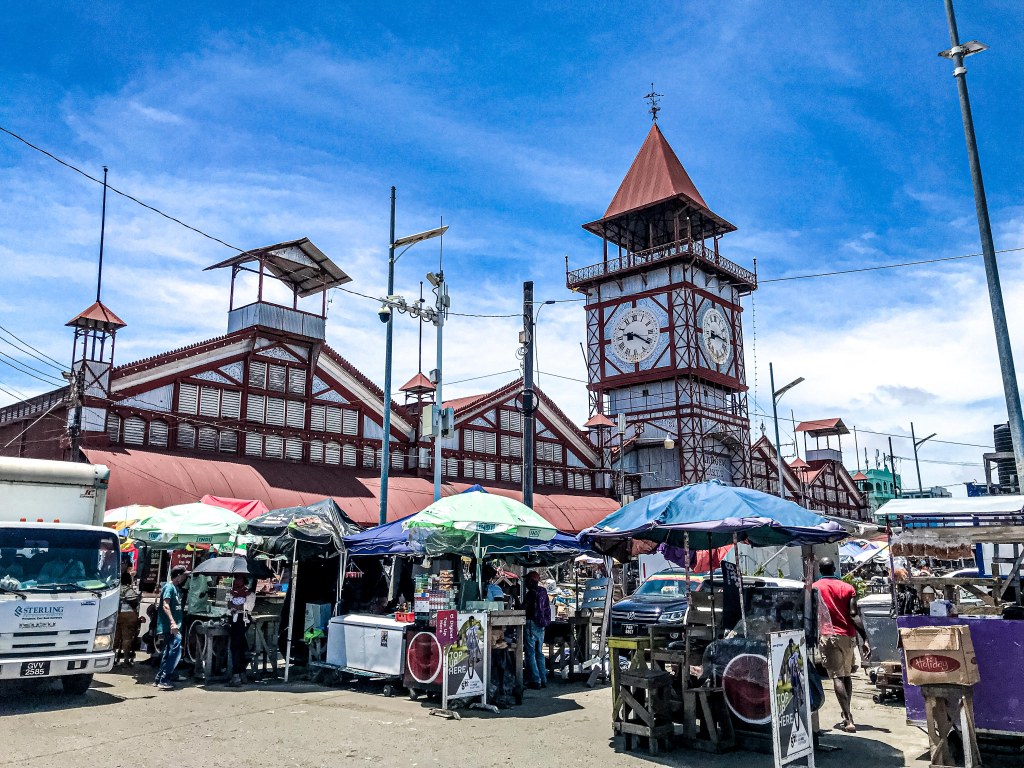
If you’re visiting Guyana, I wouldn’t recommend spending more than a day in Georgetown. Normally I love to hang around in new places for a 3 days minimum, it’s just with Guyana’s capital there isn’t so much to see and it can be very unsafe for tourists. We walked around all day and didn’t have any problems, but we left cameras, fancy phones and money in the safe at the hotel. Everyone we met told us it’s unsafe so we were prepared for the worse, we stuck to relatively busy areas, and kept our wits about us! The botanical gardens, cathedral, museums were all closed too due to covid, so we felt we’d seen all we needed to within a few hours of wandering. Don’t let this put you off visiting Guyana, however – this really only applies to the urban centres. The people we have met have been extremely warm, welcoming and genuinely excited to tell us all about their beautiful country. In Georgetown we stayed at the Grand Coastal Hotel, which was handy for Ogle airport and the flight to Kaieteur, it’s located away from the town on a main road – downside is the traffic noise, but it’s safe, clean and all the staff are incredible. They can pick you up from the airport and also have a great restaurant on site!
We decided to stay at 2 different eco lodges in the interior, Surama and Iwokrama. Surama for the simplistic lodgings, authentic Amerindian experience and to see for our own interest how a former ranch can be regenerated into something more sustainable. We chose Iwokrama for its location right on the Essequibo River and all the incredible opportunities that the area offers in terms of wildlife spotting as well as learning about the research the organisation does.
Getting to Surama Eco Lodge
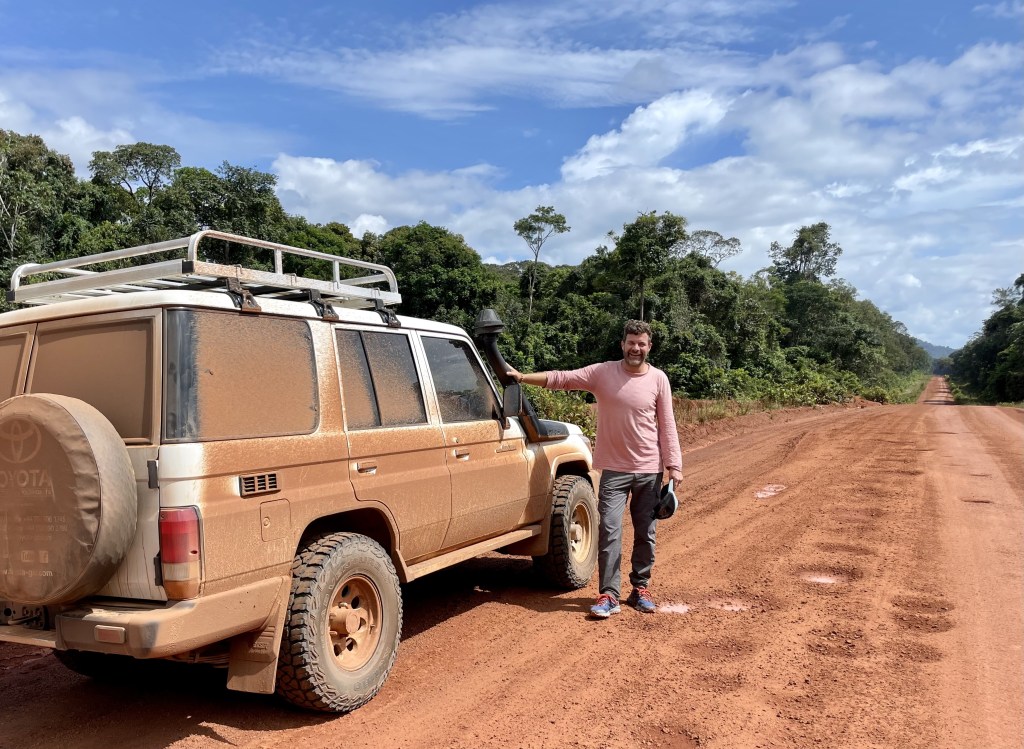
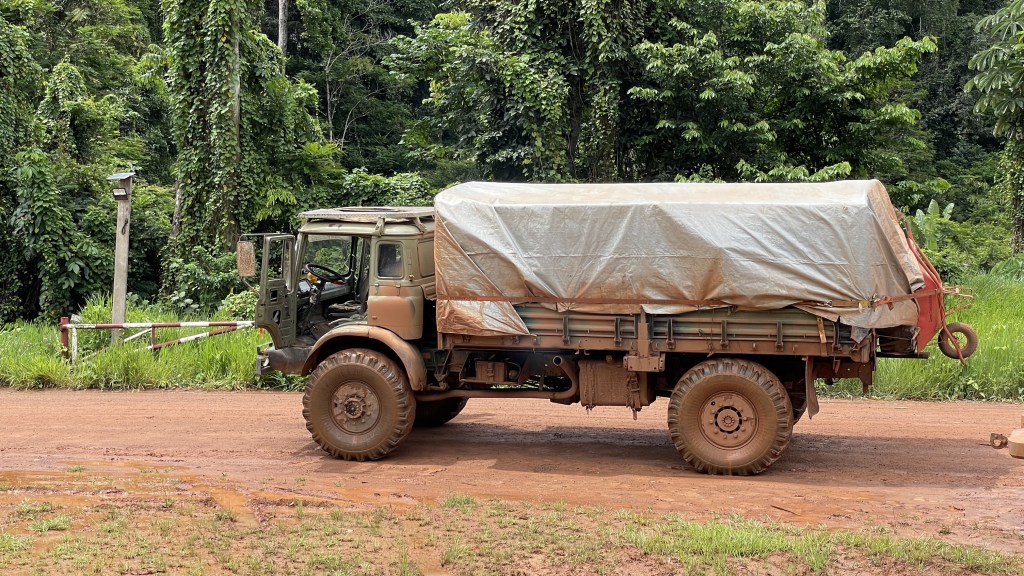
As with many things in life it’s the journey that is the most memorable! I read another blog about a couple who made the overland trip along with 2 children, and it sounded like fun. 17 hours overnight travel-time, police checkpoints, pontoon river crossings, loud music and treacherously muddy dirt roads – we are in! We googled companies offering the trip (Georgetown to Lethem is the route) and decided on Cindy’s. When booking anything in Guyana make sure you check several times that you’re booked in, and on the day turn up early to ensure your place. I don’t think they actually hold your place until they se you in the flesh and you have paid! We arrived at Cindy’s about 2 hours before the 15.30 departure time and it was fun to see them prepare the van for the trip. Fuel is loaded onto the roof rack in plastic drums – I assume because it’s far cheaper in Georegetown so they stock up rather than buy fuel en-route. Parcels bound for Lethem and other luggage are placed on top too and carefully wrapped with a waterproof sheet. Because we were getting off before the final destination the driver, Prasad, loaded our luggage in the boot instead of on the roof which was sensible. We were soon making our way out of Georgetown with the pre-warned music on and a/c cooling us down – great! Top tip – ask to be seated any where apart from the very back, which is bumpy and awkward to get in and out, which you’ll need to do regularly for various reasons! Cindy’s are sensible for leaving at that time as even the mid-afternoon traffic is horrendous, but within an hour or so you’re well out of the city and on your way. We stopped for Chinese food at around 5pm and it was delicious and a good shout as it was the last place you stop that serves a hot meal. Prasad was brilliant, really kind and he kept reassuring us “don’t worry it will be fine”, perhaps I looked very concerned?! I think it’s just because we were asking lots of questions!
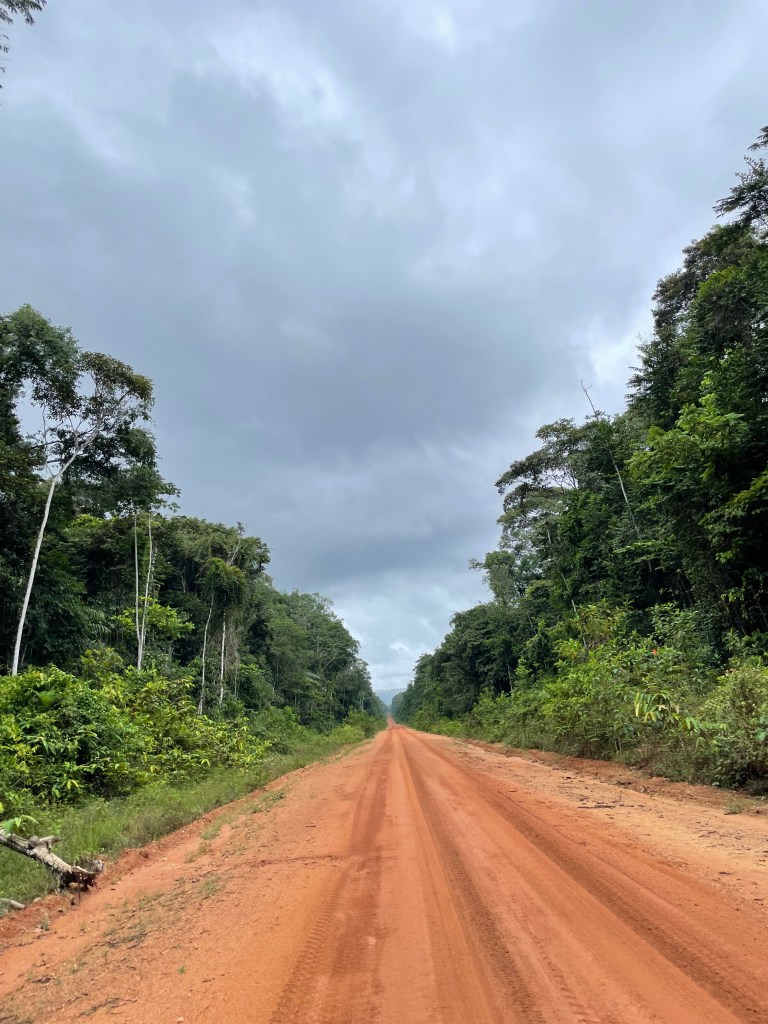
We were soon out into the countryside driving along beautiful long open undulating roads, which seemed to go on forever.



Police Check Points
If you look at a map of Guyana, or even better use Google Earth, you’ll discover a country wonderfully bereft of paved roads! There is only one road that runs through the entire country from Georgetown to Lethem. After Linden the tarmac ends and it’s just compacted mud all the way. There simply isn’t enough traffic or trade to justify anything more that that. We were travelling the the dry season, but due to climate change the seasons have become more unpredictable. For the past 4 years the whole of the region we’ve been travelling in has been experiencing unpredictable shifts in climatic patterns. The dry season now experiences heavy rain, which can devastate crops – similar to how wheat farmers in Europe have recently experienced unseasonably wet summers and crops end up rotting in the field. This explains why the road was so muddy too but Prasad experts guided his van without getting stuck once. In the wet season it’s common for vehicles to get stuck in several feet of mud, having to wait for the next vehicle to come along and help them – which they are duty bound to do, it’s all part of the experience of driving here and the main takeaway from this trip is that nothing should be rushed! Every single vehicle acknowledges the other one with a friendly flash of the lights and a honk of the horn.
Apparently the country has a problem with migrants transiting through trying to escape Venenzuela, Cuba and Haiti (among others I assume) and drug trafficking. Therefore there are lots of Police checkpoints on the route. As foreigners we had to get out and report to police at every checkpoints, sometimes we’d have to go back a second time because they’d forgotten they’d seen us. At the first check point we were asked if we “had a present for the police?”, we politely refused the suggestion, advising them we were here to learn about conservation we were not rich tourists! They didn’t have an issue with us – British passport holders don’t often try to enter Brazil illegally I guess, nor Indian ones by the look of it?! Not the case for two Cubans in our group. At checkpoint #4 the Police Officer was not letting these guys through as they couldn’t explain where they were staying in Lethem, also they did not speak a word of English and didn’t seem to want to cooperate with the Officer at all. They were simply told they couldn’t cross and were escorted back to the capital, and I assume later deported. Thinking about it now they didn’t look like your typical nature-loving tourists whilst waiting for the minibus to depart, unlike us in our worn out khaki hiking trousers, muddy hiking boots and stained long sleeve t-shirts, they were in pristine white sports shoes and tracksuits, chain smoking and looking pretty nervous. Even for those who are genuinely just interested in tourism and learning about the countries which neighbour theirs, it’s tough to travel for these guys and I feel sorry for them.
Hammocks Ahoy!
I assumed we’d just continue driving all the way through but there is actually a very welcome break from the road at around 1am by means of a roadside rest stop where you can rent hammocks and catch some horizontal-ish rest before the Essequibo River crossing. So for £2.50 the hammock is all yours for around 4 1/2 hours! I was handed a hammock and in the pitch dark had to find somewhere to hang it amongst the other already-snoring travellers. I got in mine and immediately started shivering – it was freezing! I looked at my watch which confirmed were were only 150 feet above sea level, so I don’t know exactly why it was so cold! Then a Cockerel with a particularly well developed larynx starting his very vocal and insistent calls a few metres from my head – the fantasy of a couple of hours sleep was fast disappearing!
Essequibo River Crossing
At 4.45am, Prasad stood over me with with his head torch on and said it was about time I got my self sorted and had a coffee- I couldn’t have agreed more.
Back on the road with our jolly bunch of travellers we soon made it to the crossing point at Guyana’s largest river – the mighty Essequibo. This is the kind of experience that will stay with you, and something you’d totally miss out on if flying. The sun is rising and the river is wide and wild, with the mist rising off the water and the surrounding jungle. It’s fun to watch all the vans and pick-ups, caked in mud, drive on to the pontoon. As we stood on the pontoon during the crossing, macaws and toucans flew overhead and in the distance a particularly vocal group of red howler monkeys were calling to us from the other side of the river. From here it was just another three hours ‘ drive to Surama Junction where were said goodbye to our driver and our fellow travellers. We will hopefully have Prasad as our driver again on the way back to Georgetown in three weeks’ time!
Surama Eco Lodge
The Amerindian communities live in the hinterland of Guyana in a series of sparsely populated tribal village communities. The vast areas of rainforest and savannah these populations inhabit comprise some of the most biologically diverse areas in the world. Most villagers survive on subsistence farming and it’s a tough way of life. Many of the men go away to find paid work in industries such as mining and logging, but often they are underpaid and work provided doesn’t live up to expectation. Therefore eco-tourism is absolutely lifeline for these communities and allows them to showcase and preserve their fascinating culture and preserve rich flora and fauna to foreigners. It’s fair to say that in this guise, eco tourism passively preserves the eco systems and the cultures It’s important to learn from indigenous communities about the way we should all be more connected to the planet and to our past.
The population of the hinterland of Guyana is made up of several tribal Amerindian communities, covering a massive area of hugely biodiverse land comprising savannah and rainforest.
The lodge is run entirely by the villagers of Surama for the villagers of Surama. It is located on a former cattle ranch and has since undergone some re-wilding. As you look out it feels like you’re on the border of the savannah, but in reality the village, which has been here for hundreds of years, and eco lodge is located on a large clearing within the amazon forest. I found Surama during a pretty casual perusal of Google maps and what a stroke of luck it was! This is probably the first “eco tourism” experience on our trip where you genuinely see how your stay directly benefits this community organisation which is free of shareholders and external investors.
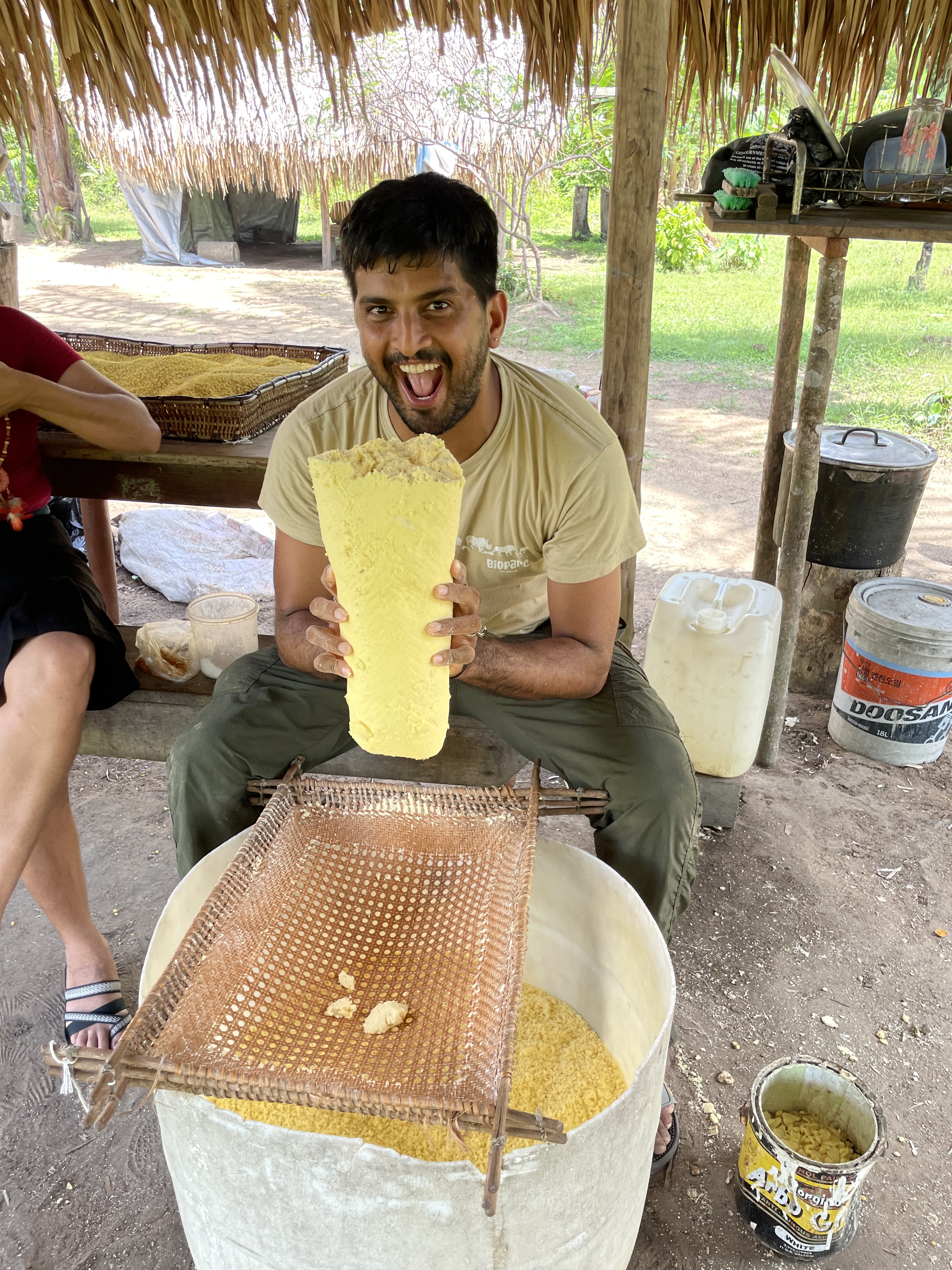
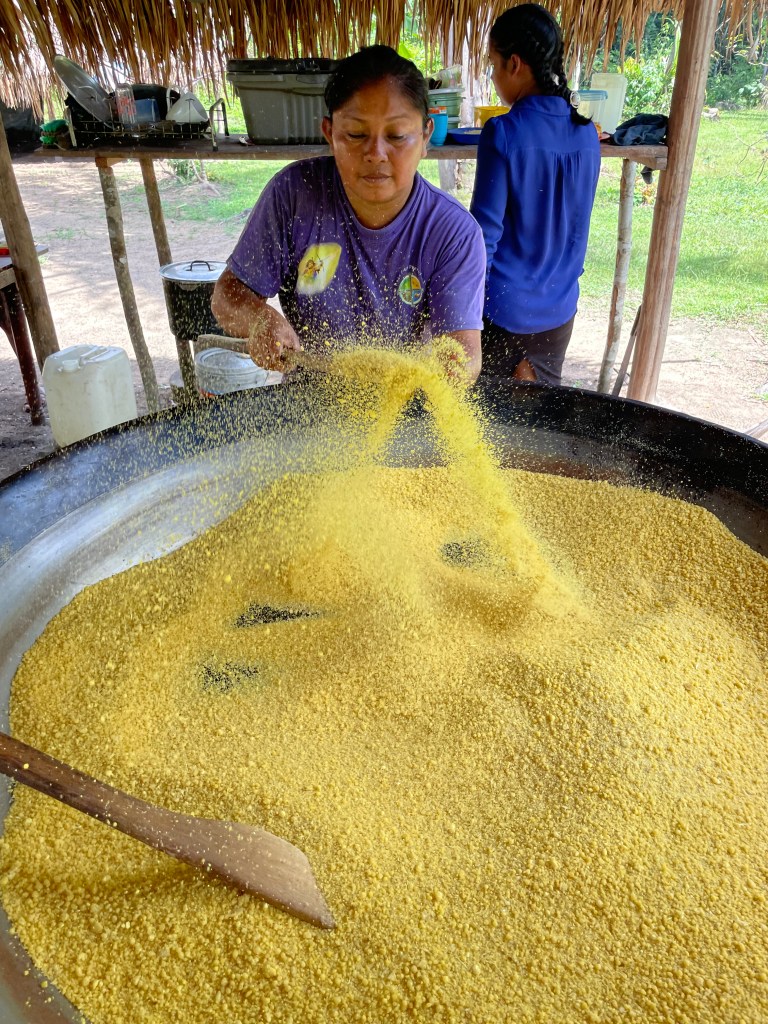
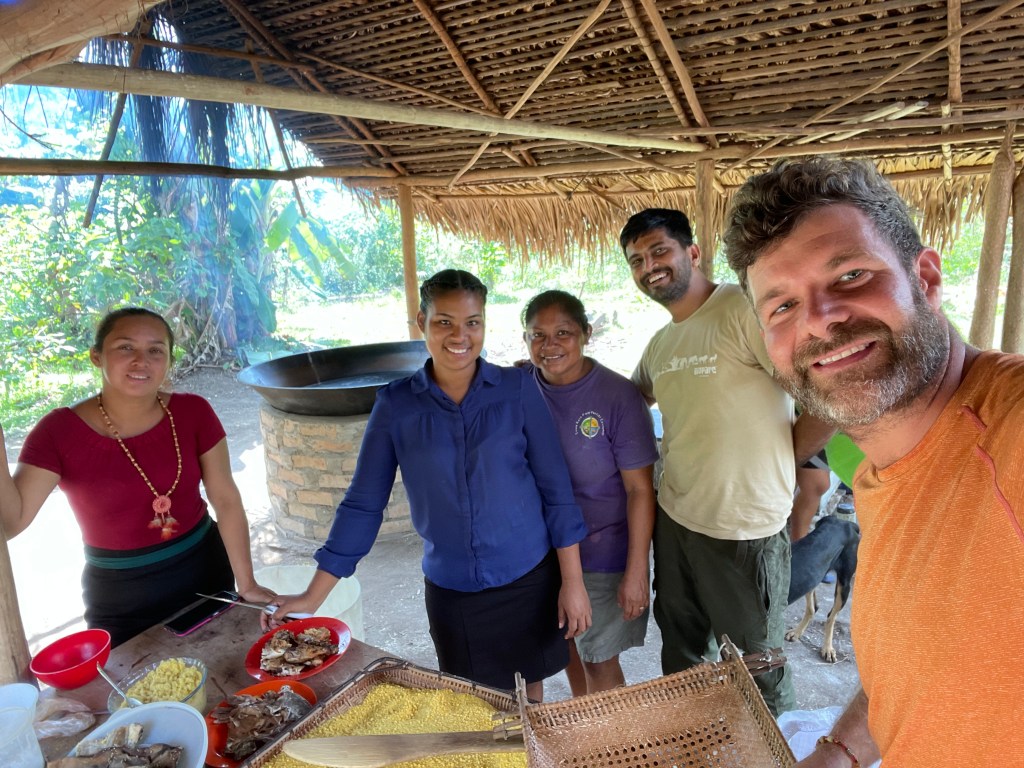
We were collected from the junction by Bertrand, one of the senior councillors, we drove along through the jungle road, past rivers and marshes (I spotted a caiman!), through the pretty village and then eventually we got to the lodge, which is quite out on it’s own and very quiet with views over to the mountains. Lisa helped us settle in and showed us our little room which was just perfect – we had a room in the dormitory house rather than one of the more expensive benabs (traditional houses) which to be honest suited us as its so private there and quiet. The lodge is amazing value for money and the staff and elders are super friendly, they really take time to tell you about their life there and we felt like one of the family! You can see why they are proud of their way of life and you can feel that they have such a strong identity and culture. The food is cooked with immense love and dedication by Angela and Lisa who described the process for making some of the delicious dishes on offer. For example ferrine, which is made from cassava and looks a little bit like cous cous takes several days to prepare – see my post about Amerindian Guyanese and Guyanese food here!
Ferrine (baskets) time taken etc
Copoisou juice
Pirana
Cassava bread
Palm nut
The lodge offer guided tours such as bird watching, river fishing, trekking, cultural tours and jungle survival training. Every September there are celebrations of Amerindian culture so that would be a great time to visit.

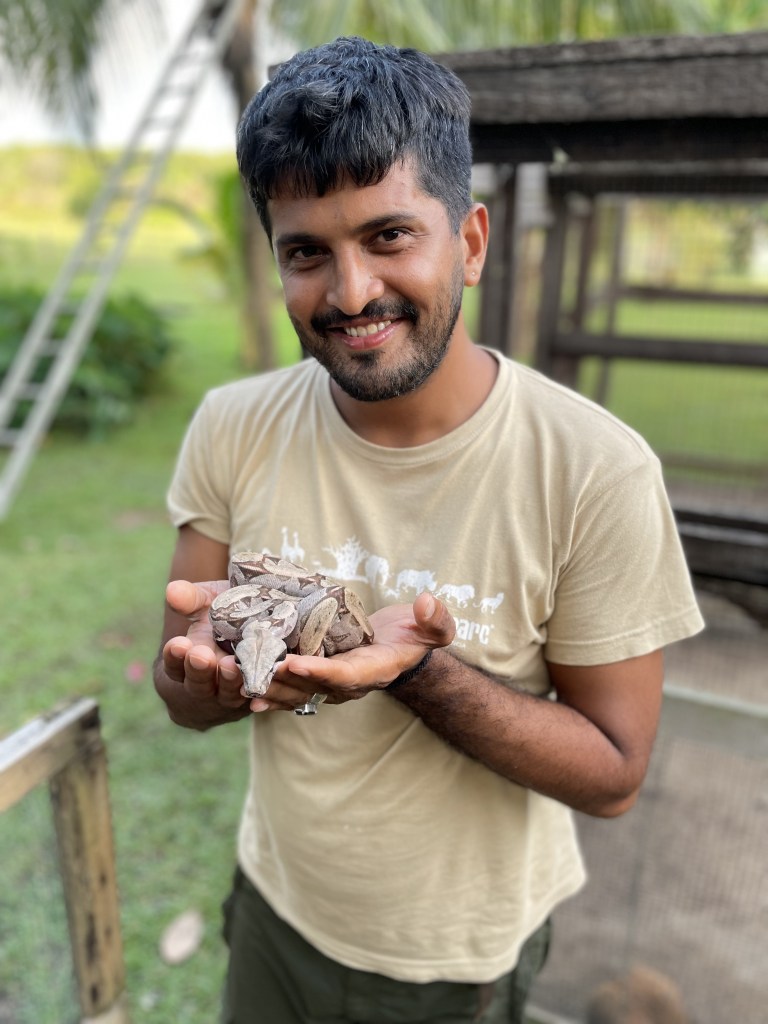


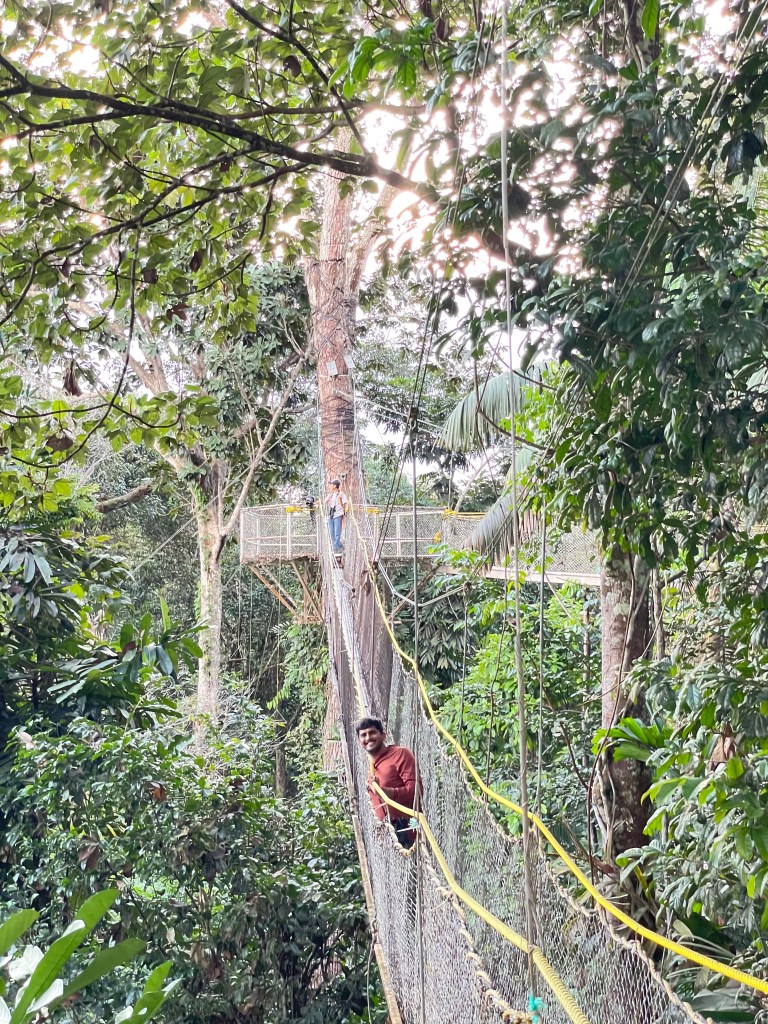
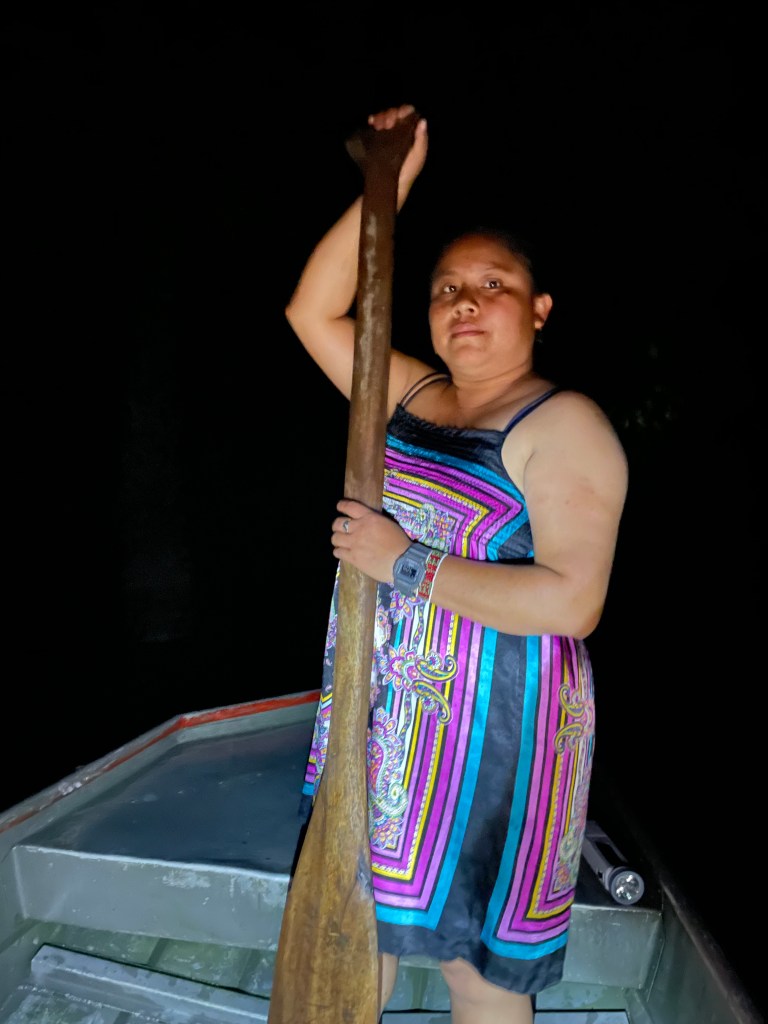
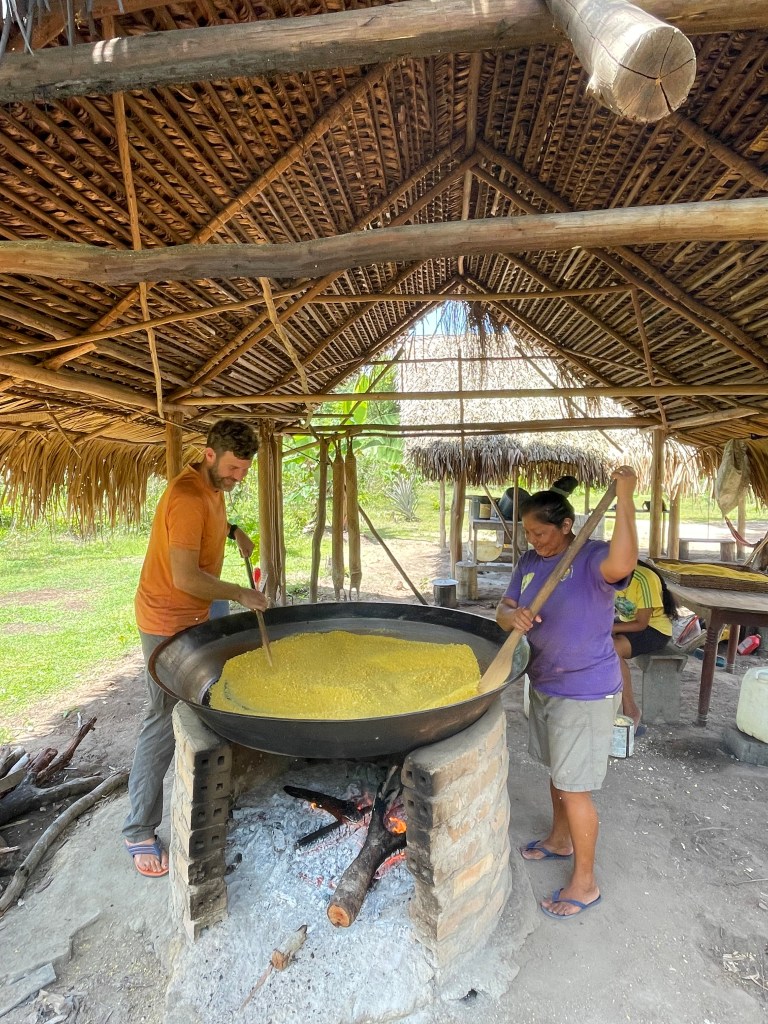

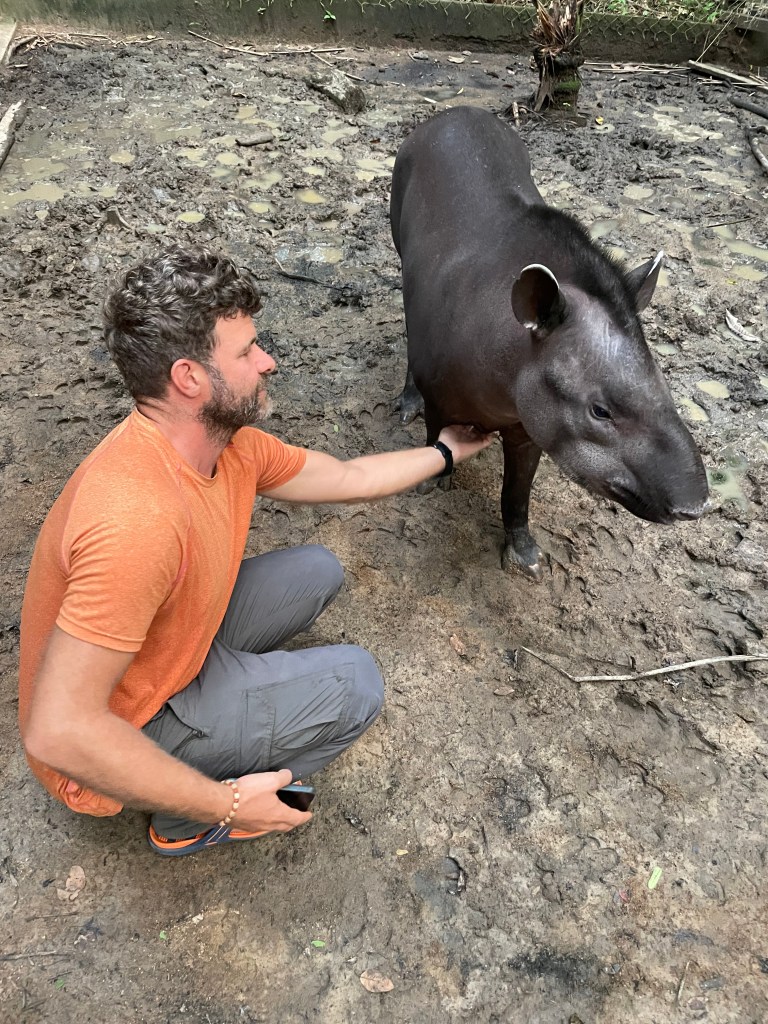

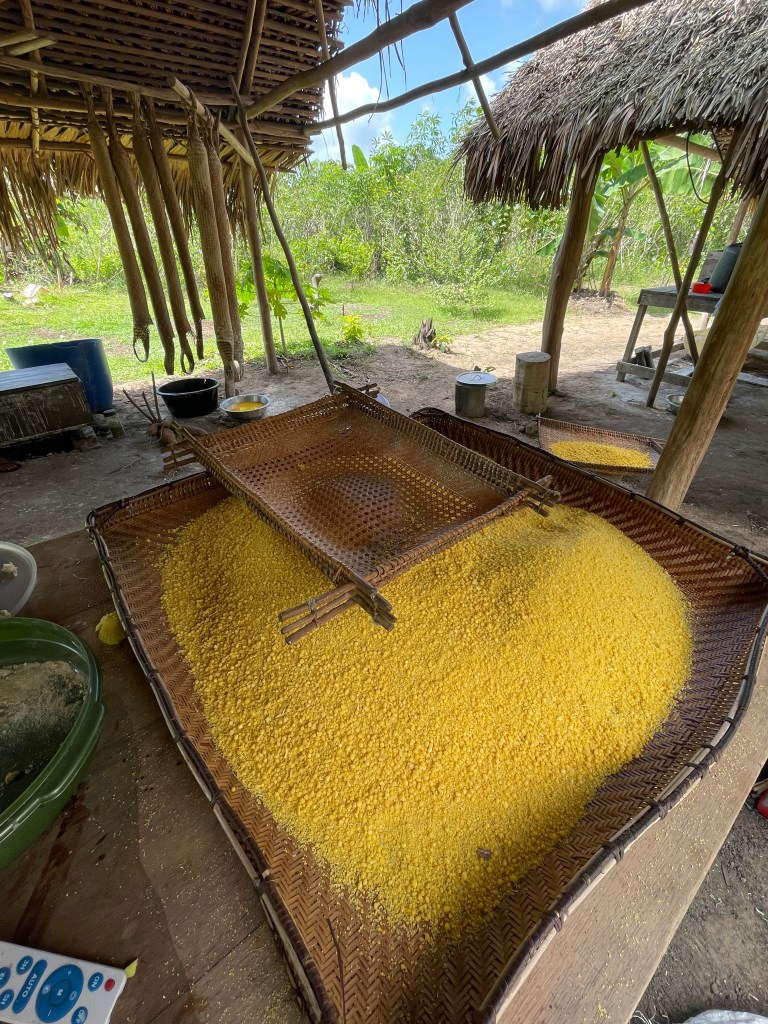
Wildlife Spotting
We booked several different tours with Surama and because we were the only independent travellers staying we had him all to ourselves each time! We were extremely lucky as the harpy eagle was nesting a few miles away and she only nests once every four years. It was an unforgettable experience, and we spotted loads of wildlife on the boat ride there too – through stunning unspoilt jungle we meandered along the burro burro river, spotting red-and-green macaws, channel billed toucans, black-necked aracari, amazon kingfisher, green kingfisher, pygmy kingfisher, several huge cocoi heron, sunbittern (a slender wader) and of course the harpy! Ok, we only saw her head, but just to be there in her habitat was a treat. I heard that some previous visitors had flown a drone near her nest – this is not acceptable and if you’re reading this and hear of people doing similar things please try and stop it. Scaring and disrupting wildlife so you can get some footage is irresponsible and reckless. As tourists we should set an example and show we acre about the places we visit not just see them as places we can take things away from. That drone could easily have caused her to leave her nest permanently.
The following day Lionel took us to spot the cock of the rock! We were in luck! We trekked to a series of huge boulders – don’t forget this area is part of the guinean ring where the geology is some of the oldest on earth – this was the territory of several cocks of the rock! Lionel pointed out a nesting female hidden expertly under one of the huge boulders, she is much darker and plainer than her male counterpart. She sits in a nest made of mud that looks like it’s been there for years. We then quietly sat in wait for the male to show up. Whilst waiting we spotted come beautiful nun-birds with red beaks. Then the cock of the rock suddenly appeared with a flourish! Wow! He went from branch to brach, showing off to us, we were in awe! Such a vibrant reddish orange plumage and unusual appearance – our first bird of paradise! At one point he even flew down onto his personal courtship area – a patch on the jungle floor he keeps clean and tidy where he will show off to females in the hope of finding a mate. He didn’t try and court us but it was amazing to be in his territory whilst feeling that we were not intimidating him. We kept our distance and remained totally silent, always avoiding any sudden movements. On the trek back we also spotted a tortoise, more macaws, six grey-winged trumpeters, agouti, capuchin monkey and two more female cocks of the rock! We also spotted a tyra from our verandah today!!
 tomandbuntytrails
Leave a comment